Best Trees to Plant in Southwestern Ontario by Season
What we plant most often across Elgin, Oxford, and Norfolk Counties, broken out by the season that gives each species its best start.
Choosing the right tree for your property starts with knowing what thrives here and when to put it in the ground. Not every tree belongs on every property. Soil type, sun exposure, mature canopy size, and your goals for the space all play a role. But one of the biggest factors most property owners overlook is timing.
Different species establish best in different seasons. Plant the wrong tree at the wrong time and you're fighting an uphill battle with transplant shock, root stress, and winter damage. Get the timing right and the tree practically takes care of itself after the first year.
Spring planting (April to early June)
Spring is the most popular planting window in Southwestern Ontario. The ground has thawed, moisture levels are high, and trees have a full growing season ahead to push roots before winter.
- Sugar Maple: the classic Ontario shade tree. Tolerates a range of soils and reaches 60 to 80 feet at maturity. Brilliant fall colour.
- Red Oak: a strong, fast grower that handles wind and clay soil. Excellent for large rural properties and windbreaks.
- Serviceberry (Amelanchier): a smaller native tree with spring blooms, edible berries, and good fall colour. Works well as an ornamental or along property lines.
- White Birch: light bark and graceful form. Prefers moist soil and partial shade. Best planted in clusters of three.
- Tulip Tree: one of the tallest hardwoods in Ontario. Needs space but rewards with fast growth and distinctive flowers.
Spring planting tips
- Get trees in the ground before leaf-out for the least transplant stress.
- Water deeply at planting and weekly through June if rainfall is below 25 mm per week.
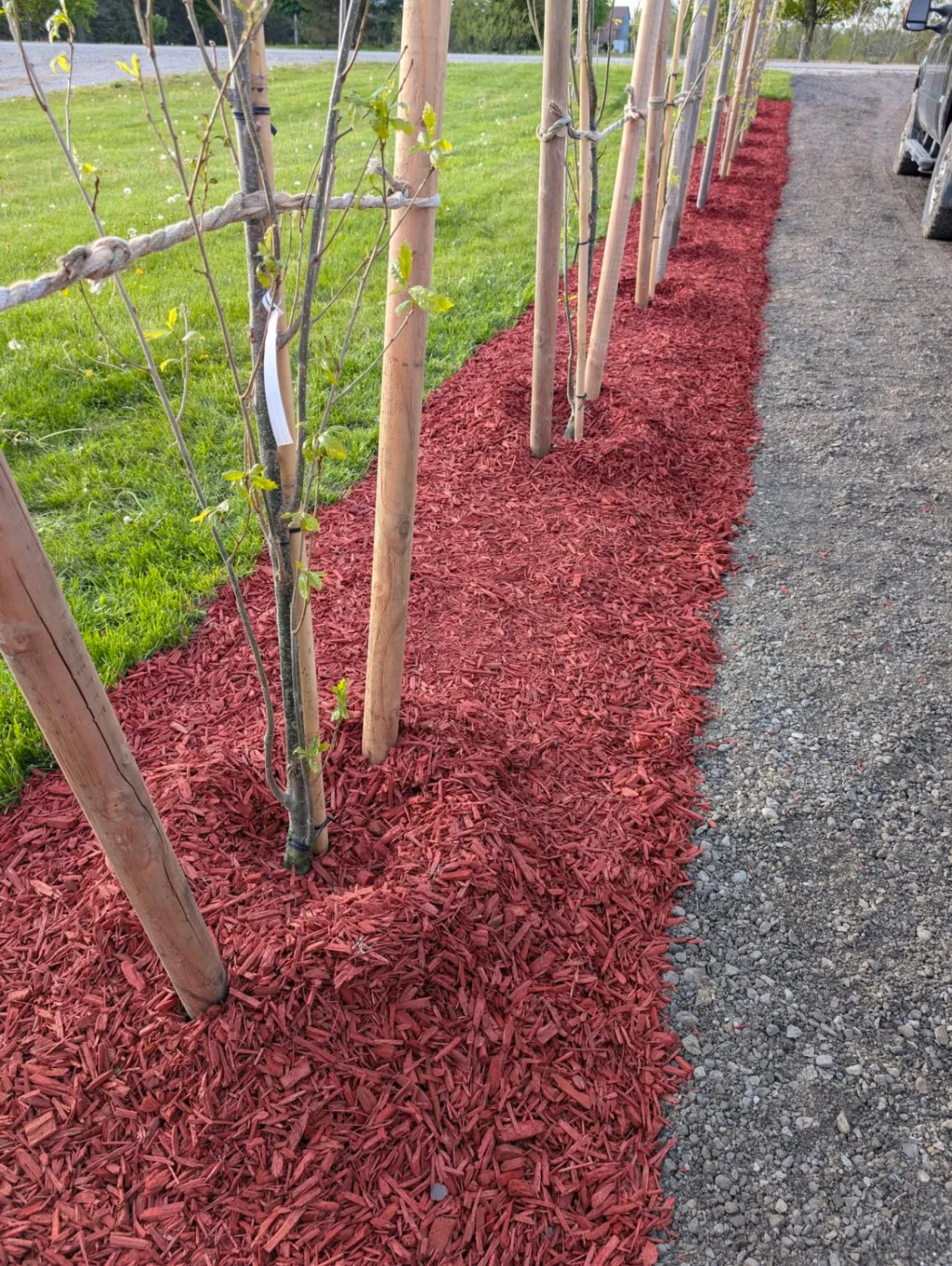
- Mulch to the drip line, but keep mulch 10 cm away from the trunk.
Fall planting (September to late October)
Fall planting is underrated. Cooler air temperatures slow top growth while still-warm soil encourages root development. The tree arrives at spring already anchored.
- Norway Spruce: a fast-growing evergreen for privacy screens and windbreaks. Tough and low-maintenance once established.
- White Cedar (Eastern Arborvitae): the go-to hedging tree in rural Ontario. Dense year-round screening. Handles heavy pruning.
- Bur Oak: a native species that tolerates drought, poor soil, and wind. Slower to establish but almost indestructible once rooted.
- Red Maple: faster than Sugar Maple with reliable fall colour. Works in wetter sites where other maples struggle.
- Eastern White Pine: fast-growing native softwood. Good for naturalized areas and large-lot screening.
Fall planting tips
- Plant at least four to six weeks before the ground freezes to give roots time to anchor.
- Water thoroughly at planting and once more before freeze-up.
- Apply a thick mulch ring to insulate roots through the first winter.
Summer planting (June to August)
Summer planting is possible but requires more aftercare. Heat and dry spells stress new transplants, so species selection matters more and watering is non-negotiable.
- Colorado Blue Spruce: hardy and drought-tolerant once established. The blue-grey needles hold up through heat.
- Hackberry: a tough, adaptable native that tolerates drought, poor soil, and urban conditions. Often overlooked but reliable.
- Black Walnut: best planted in open areas away from gardens (the roots suppress nearby plants). A valuable timber tree for rural properties.
- Austrian Pine: handles dry, sandy soil and exposed sites. Good for properties near gravel roads.
Summer planting tips
- Water deeply two to three times per week for the first eight weeks.
- Plant in the morning or evening to avoid peak heat stress.
- Consider a temporary shade barrier for the first two weeks if the site is fully exposed.
- Avoid pruning at planting; let the tree focus all energy on root development.
Winter considerations
No planting happens in winter in Southwestern Ontario, but it's a good time to plan. Walk your property when the canopy is bare and you'll see sight lines, wind exposure, and spacing issues that disappear once leaves are out.
- Identify where you need shade, screening, or wind protection.
- Mark utility lines and septic fields before the ground thaws.
- Schedule spring planting so your tree order is confirmed before nursery stock sells out.
Choosing between native and ornamental trees
Both have a place on a well-planned property. Native species require less long-term care and support local ecosystems. Ornamentals offer controlled size and specific visual appeal.
Go native when you want a low-maintenance tree that handles local weather extremes, you're planting near naturalized areas, wetlands, or woodlots, or you want to support pollinators and wildlife habitat. Go ornamental when you need a tree that stays within a specific height or spread, you want consistent form for a formal entrance or streetscape, or the site has constraints like overhead wires or tight spacing.
How many trees does your property need?
- Small residential lot (under 0.25 acres): two to four trees placed for shade, privacy, or curb appeal.
- Standard residential lot (0.25 to 1 acre): four to eight trees, mixing shade, ornamental, and evergreen.
- Rural property (1 acre or more): ten or more, including a windbreak row and naturalized plantings.
- Commercial properties and HOAs: planned layouts with graded rows, consistent spacing, and species that tolerate foot traffic and salt.
Professional tree installation makes a difference
Digging a hole and dropping in a tree sounds simple. But pit depth, root ball handling, soil amendment, staking technique, and first-season watering schedules are what determine whether a tree thrives or just survives.
We've planted hundreds of trees across Elgin, Oxford, and Norfolk Counties. Every installation includes a site assessment, proper species selection for the conditions, and a first-season care plan. Ready to plant? Contact us today for a free consultation — we'll walk your property and recommend the right trees for your goals, your soil, and your budget.